This story occurred circa mid-September 1991, four months after Eritrea gained independence from Ethiopia. My college education at Addis Ababa University was interrupted in my second semester of freshman year and I was back in Eritrea with an uncertain future.
It had been two weeks since my friend Tesfom and I arrived at Maria Tselam (ማርያ ጸላም) as middle school teachers at Asmat Boarding School as part of a national service that had yet to be declared officially. We met in high school a couple of years earlier. I knew Tesfom very well as he was a top student and organizer of all things fun in high school and our freshman year at Addis Ababa University the year before. I doubt he knew much about me other than my existence. I mostly kept to myself and did not participate in the soccer games that bound together most of our class.
We were dispatched from the City of Keren to Asmat atop Mercedes-Benz short-bonnet trucks, loaded to capacity with grains. The treacherous drive mostly followed dry river beds and unmarked trails on rocky mountains. The trucks were owned by the Eritrean People’s Liberation Front (EPLF), who victoriously ended the war the previous spring.
When we arrived ten hours later, we were served watery goat stew over the worst injera of my life to that date on an unsanitary shared platter. The meal was an affront to my vegetarian, sheltered, city boy sensibility. To the locals who hitched a ride with us on top of the grains and the EPLF fighters who waited to welcome us, the dinner was a rare feast—a welcome change from the daily routine of lentils. I do not think I ate more than two mouthfuls before I stopped. I hoped, planned, to buy proper food the next day. A short hungry night was easy to manage.
It did not dawn on us how different our life was going to be until the next morning. There was no town or settlement around us. A few nomadic families who were passing by the localities had pitched their tents near the school. The rhythmic pounding of their mortars as they ground their morning coffee was the only sound we could hear for a while. We were the only civilians among two dozen other teachers and staff of the boarding school, who were all EPLF fighters.
They built the school to serve children of the nomadic population of the region while fighting the more powerful Ethiopian army. They sited the school at the bottom of a valley, with the single or double-classroom structures scattered randomly under the few big acacia trees, inaccessible and invisible to Ethiopian Air Force bombers.
Breakfast was sticky-sweet hot tea and unleavened, rubbery bread. We walked to the almost dry stream bed to check out the place. The water smelled horrible and we quietly judged the fighter woman who gave us the jugs to collect water. But we soon realized that scrubbing the jugs with the powdered soap we brought with us did not have any effect. We noticed that we were only a few meters downstream from a pack of camels and goats that were urinating and defecating on the stream. The smell of urine was in the water.
We jumped into teaching two weeks later while learning how to teach for the first time. Tesfom was assigned to teach 7th and 8th grade math, and I was teaching science. I vaguely remember that one of the teachers showed me how to prepare a lesson plan the night before. I never heard of the idea and didn’t get it.
A day or two after my first class, I woke up with an excruciating headache and decided to stop by the school clinic on my way to my first period of the day. The straw hut was staffed by a fighter field medic and her assistant—a local young bride with basic health training after completing eighth grade at the same school a couple of years earlier. She was tall and slim. Many of the local population, nomads who moved around the desert following their herds of camels and goats, were tall. I forgot her name, but I vaguely remember that she wore a yellow dress and giant nose rings indicating she was married—to a much older man.
I asked her to give me a painkiller for my headache. Instead, she checked my temperature and checked my eyes. She told me that I was to follow her and forget teaching. She told me that I had contracted malaria. I didn’t believe her. I grew up in a city and had been regularly checked by pediatricians who wore a stethoscope. How could I trust a woman my age or younger, whose highest formal education in science is the course I was about to teach?
She gave me a few pills and put me in bed. She stayed by my side for the next several hours, checking my temperature repeatedly. Sometime in the afternoon or the next day, she decided to switch me to a stronger drug because I was not responding to the first one. Some time passed. It could have been hours or days. But at some point I remember her telling me that I was not responding to the second drug either. She needed to put me on a third very strong drug, Quinine, that she pushed through intravenously. She must have kept her stash of saline fluids in her hut or under tree-shade to keep it cool. There was no electricity within tens of miles of the school, except the small gas-powered generator that was used to light the dining and meeting room for a few hours every evening.
I was totally out of it. I don’t remember how many days passed. I don’t remember going to the bathroom (a polite word for relieving yourself while hiding behind tree branches as thin as my legs) or changing my clothes. The first clear memory I have is attempting to get up to pee. I did not have any strength and my legs looked very thin. I also remember looking for Tesfom, but he was nowhere to be found. The first interaction I remember is a conversation with the school director, an EPLF fighter. He was asking about my siblings and family. I can still see him wondering out loud how my mother would react if I died. To him and his fellow fighters, death in war or by malaria was not a scary event. What appeared to make him sad was that if I died then, only a few months after the end of the war, there would be no cause to glorify my demise.
After I came back to my full senses, they told me Tesfom got malaria as well. He also progressed to the strongest medicine like me. But unlike me he had a severe allergic reaction to the drug and they had to transfer him on a hand-carried gurney to a slightly bigger field clinic an hour’s hike away. I did not believe them. The director’s nonchalant comments about death were still fresh in my mind. After incessantly begging one of the quiet fighters to take me to the clinic, he relented and we started the slow trek in the evening after the weather had cooled down. By the time we arrived it was dark. Tesfom was not on the bed they told us. We scrambled to find him and he was nowhere. My instinct told me that he must have died and I broke down sobbing.
Every time I think about it, I can still feel the mix of fear, anger, and sadness of that evening. After what felt like an hour a medic led us to Tesfom who was sleeping under a tree. His face was unrecognizably swollen. He appeared worse than I was at my lowest. I don’t remember how long it took us to recover or much else from that time.
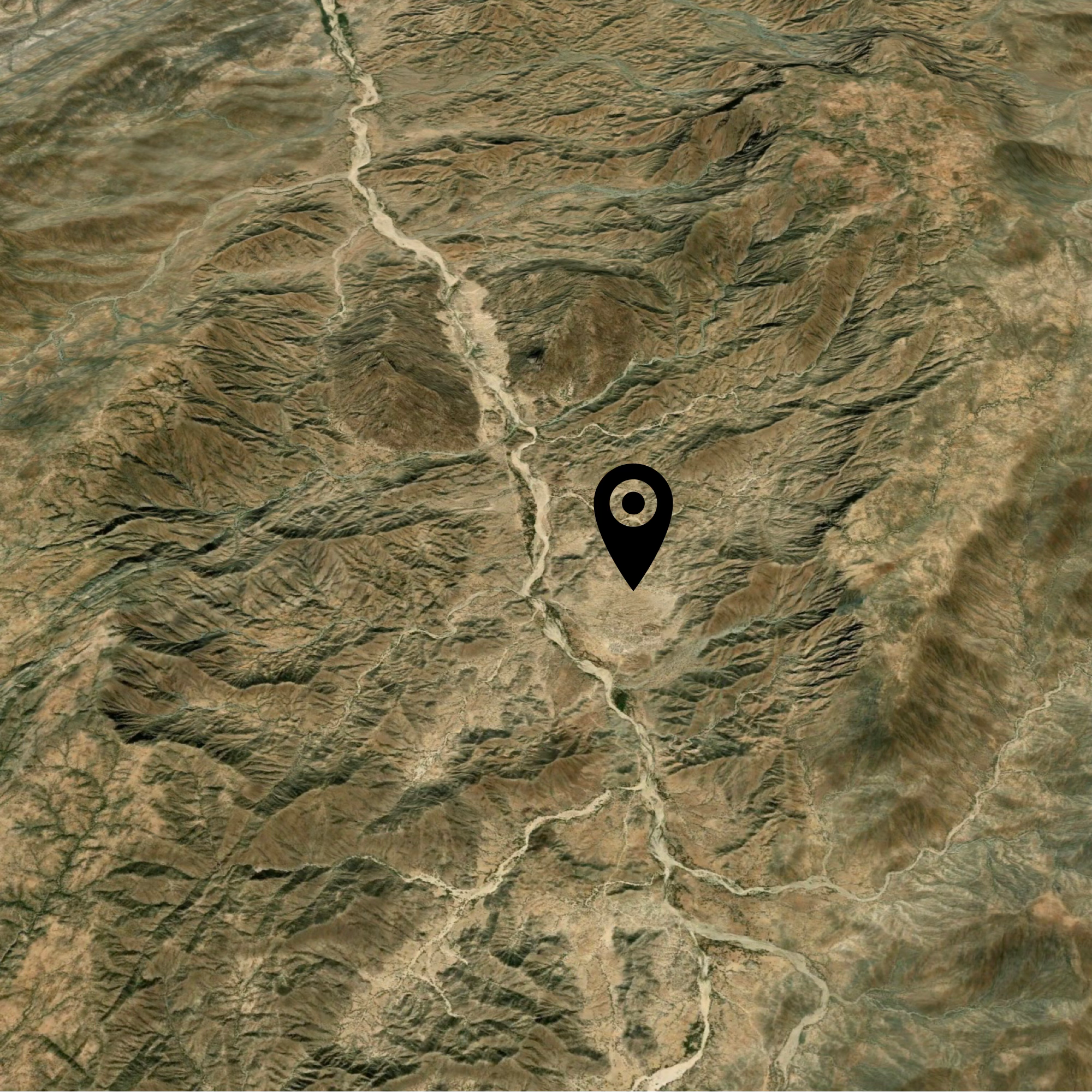
The very location of the school at a valley bottom, which was chosen to avoid the man-made flying machines that deliver bombs, is also a perfect breeding ground for the flying insects that carry deadly malaria parasites. Our arrival could not have been timed any worse either. We came at the end of the rainy season when the creeks had some trickling water. The students (about 200 of them) and staff congregated nightly in a small area of the school, where power from the generator could reach. Unlike the rest of them, Tesfom and I grew up in a dry highland plateau far from mosquitos. After a couple of weeks of poor diet, our immune systems that had never seen malaria before could not put up any resistance. After I fully recovered, my savior medic would tell me that what I had was the worst kind that attacks the brain. She did not have any tools other than her eyes and a mercury thermometer, but she was convinced my severe headache, delirium, and the blood streaks in my eye were clear signs. If her diagnosis was correct, I would learn later on, I must have had the deadliest form of the disease.
I always wonder how her life must have turned out. If only she had the opportunities I got, with her sharp mind and compassion, she would have become an amazing physician. But then again, by being there, she probably served and saved more lives than a professionally trained doctor. I can only hope that her life has been filled with the same love, kindness, and generosity that she so freely gave to me, Tesfom, and the countless students and villagers whose lives she undoubtedly touched.
As I reflect on my own brush with this devastating disease, I am filled with a profound sense of gratitude for the life I have been privileged to lead, and a deep admiration for the resilience and strength of those who confront such hardships as a matter of course.
Tesfom and I graduated from the University of Asmara four years later and grew closer as friends over the years. We lost touch for a brief period when I left for the United States to pursue graduate school. Exactly a decade after our fateful journey began at Asmat, our paths crossed once again in California. I had just started a new job and he was beginning his graduate studies. Unbeknownst to us, we lived just a block apart. We remain close friends.